Front Line Leadership Development for Manufacturing
Performance
Front Line Leadership Development for Manufacturing Performance - Why Front Line Leadership Development Is Critical for Manufacturing Performance
There is a point in every manufacturing business where performance stops being about machines, systems and processes - and starts being about leadership.
- Not leadership in the boardroom
- Not leadership written in a strategy document
- Not leadership discussed once a quarter in a senior management meeting
The leadership that really shapes daily manufacturing performance happens much closer to the action. It happens on the line, on the shift, in the handover, during the team briefing, when standards slip, when pressure rises, when a customer order is at risk, when quality becomes inconsistent, when someone refuses to follow the process, or when a supervisor has to make a decision with five people waiting for an answer.
That is front-line leadership.
And in manufacturing, front-line leadership is not a “soft skill” issue.
It is a performance issue.
Strong front-line leadership can improve employee experience, increase engagement and reduce turnover in manufacturing environments. Manufacturing leadership training is also directly connected with safer teams, improved productivity and more confident front-line leaders.
So if a manufacturing business is trying to improve output, quality, safety, accountability, communication, retention or culture, one of the most important questions to ask is this:
Are our supervisors and team leaders properly developed to lead people, not just manage tasks?
Because if they are not, the business will feel it.
- It may show up as missed targets
- It may show up as inconsistent standards
- It may show up as poor shift handovers
- It may show up as avoidable conflict
- It may show up as higher absence, lower morale, more HR issues or too much firefighting
But underneath many of those problems is often the same root cause: front-line leaders have been given responsibility without enough development.
Manufacturing Leadership Scorecard
Answer each question to receive your leadership score.
 Manufacturing supervisor leading a team briefing on the factory floor
Front Line Leadership Development for Manufacturing Performance
Why is front line leadership development critical for manufacturing performance?
The Hidden Performance Lever In Manufacturing
Manufacturing businesses invest heavily in equipment, technology, systems, quality processes and operational improvement. That is understandable. These things matter.
But one of the most powerful performance levers is often the one standing between senior management and the shop floor.
- The supervisor
- The team leader
- The shift leader
- The first-line manager
These are the people who turn business expectations into daily action. They translate targets into priorities. They explain changes. They reinforce standards. They notice problems early. They influence attitude. They shape the working environment. They decide whether issues are addressed or ignored.
That is why front-line leadership development is critical for manufacturing performance.
- A process is only as strong as the people leading it
- A standard is only as strong as the supervisor willing to uphold it
- A safety culture is only as strong as the team leader prepared to challenge shortcuts
- A continuous improvement plan is only as strong as the people encouraging teams to speak up and contribute
- A production target is only as realistic as the communication, planning and teamwork behind it
Manufacturing leadership skills such as communication, coaching, conflict resolution and accountability are regularly identified as essential for supervisors.
This matters because performance is not created by instruction alone.
Performance is created through clarity, consistency, confidence and follow-through.
That is leadership.
Front Line Leadership Development for Manufacturing Performance
Why is front line leadership development critical for manufacturing performance?
Why Technical Skill Is Not Enough
Many manufacturing supervisors are promoted because they are technically strong.
They know the job. They understand the machine. They know the process. They are reliable. They get things done. They may be the person everyone goes to when something goes wrong.
That technical strength is valuable.
But it does not automatically prepare someone to lead people.
- A great operator can still struggle to challenge poor behaviour
- A skilled technician can still avoid difficult conversations
- An experienced team member can still find it uncomfortable to manage former colleagues
- A reliable employee can still become overwhelmed when they are responsible for performance, people, safety, communication and conflict.
This is where manufacturing businesses often make a costly mistake.
They assume that because someone understands the work, they will know how to lead the people doing the work.
But supervision is a different skill set.
Leadership requires communication, judgement, emotional control, coaching, delegation, accountability and confidence. It requires the ability to influence people who may not always agree, listen or respond positively.
Without development, new supervisors often default to one of three behaviours.
- They become too soft and avoid challenge
- They become too forceful and damage trust
- Or they become too task-focused and forget that performance depends on people
None of these responses means the supervisor is failing as a person.
It usually means they have not been trained properly for the reality of the role.
That is exactly why structured front-line leadership development is so important.
Front Line Leadership Development for Manufacturing Performance
Why is front line leadership development critical for manufacturing performance?
Front-Line Leaders Shape The Employee Experience
The employee experience in manufacturing is not only shaped by company values, benefits, policies or senior leadership messages.
It is shaped every day by the person leading the shift.
- Does the supervisor listen?
- Does the team leader explain decisions clearly?
- Are standards applied fairly?
- Are people treated with respect?
- Are problems dealt with early?
- Are good efforts recognised?
- Are mistakes used for blame or learning?
- Do people feel safe to speak up?
- Do they know what is expected of them?
Front-line leaders have a direct influence on how people experience work. Strong front-line leadership in manufacturing can improve employee experience, boost engagement and reduce turnover.
That is a major point for HR managers, manufacturing directors and business owners.
Retention is not only about pay.
Engagement is not only about surveys.
Culture is not only about values on a wall.
People often experience the company through their immediate manager.
If that manager is unclear, inconsistent or unsupported, the team feels it.
If that manager is confident, fair and communicative, the team feels that too.
A well-developed front-line leader helps people understand where they fit, what is expected and why their work matters. That sense of clarity can improve morale and reduce frustration.
And in manufacturing, where pressure, pace and repetition can create tension, that leadership influence is invaluable.
The Link Between Leadership And Productivity
Productivity is often discussed in terms of processes, downtime, labour planning, materials, systems and equipment.
All of those things matter.
But people also affect productivity every hour of every shift.
- Do team members start on time?
- Do they understand the priority?
- Do they follow the process?
- Do they report issues early?
- Do they support each other?
- Do they take ownership?
- Do they wait to be told or act responsibly?
- Do they understand what good performance looks like?
A front-line leader influences all of this.
- When supervisors communicate clearly, production starts more smoothly
- When team leaders coach effectively, people become more capable
- When shift leaders hold people accountable, standards are maintained
- When first-line managers manage conflict early, less time is lost to tension and distraction
- When leaders build trust, people are more likely to raise issues before they become expensive problems
Manufacturing leadership training is often positioned as a way to improve productivity and develop confident front-line leaders
That confidence matters.
A confident supervisor is more likely to make decisions, address problems, challenge poor standards and support the team through pressure.
An unconfident supervisor may hesitate, avoid, delay or escalate everything upwards.
When too many problems are escalated unnecessarily, senior managers become overloaded and the business becomes slower.
Developing front-line leaders helps decisions happen closer to the work.
That improves responsiveness.
And responsiveness improves performance.
Front Line Leadership Development for Manufacturing Performance
Why is front line leadership development critical for manufacturing performance?
Leadership Development Reduces Firefighting
Many manufacturing businesses become trapped in firefighting.
Every day feels reactive.
- The same issues keep returning
- The same people problems keep resurfacing
- The same communication breakdowns keep happening between shifts
- The same quality concerns keep being discussed after the damage is done
- The same supervisors are stretched, stressed and unsure how to get ahead of the problems
Firefighting often feels like an operational problem.
But it is frequently a leadership development problem.
If supervisors are not trained to identify root causes, communicate expectations, coach people, challenge behaviour and follow up consistently, the workplace becomes reactive.
Problems are solved temporarily rather than properly.
Standards are discussed but not embedded.
People are told what to do but not developed.
Issues are escalated but not prevented.
Front-line leadership development helps supervisors move from reacting to leading.
That shift is critical.
A supervisor who has been developed properly is more likely to ask:
- “What caused this?”
- “What expectation was unclear?”
- “What needs to change?”
- “Who needs support?”
- “What do we need to follow up?”
- “How do we stop this happening again?”
That is very different from simply saying:
“Sort it out.”
The first approach builds performance.
The second approach often creates short-term compliance and long-term frustration.
Latest Articles





Building A Stronger Leadership Pipeline
A manufacturing business cannot build long-term success if leadership capability only exists at senior level.
The leadership pipeline has to start earlier.
It has to include future supervisors, team leaders, shift leaders and first-line managers.
Manufacturers need to develop their leadership pipeline if they want to build a resilient leadership culture for long-term success.
This is especially important in businesses facing skills shortages, succession challenges or growth.
- Who will lead the next shift?
- Who will manage the new line?
- Who will support apprentices?
- Who will take ownership of improvement projects?
- Who will step up when a supervisor retires, leaves or moves into a new role?
If leadership development only starts after someone is promoted, the business is already behind.
A better approach is to develop leadership capability before it becomes urgent.
That means identifying potential early.
- It means giving future leaders the language, confidence and tools they need
- It means helping technically strong people understand the people side of performance
- It means creating a culture where leadership is not treated as a title, but as a skill that can be learned
This is where an online leadership academy for manufacturing teams can be particularly valuable.
It allows individuals and groups to develop consistently, without waiting for a crisis or removing large numbers of people from production at once.
Front Line Leadership Development for Manufacturing Performance
Why is front line leadership development critical for manufacturing performance?
Why Scalable Front-Line Leadership Development Matters
Manufacturing businesses often operate across different shifts, departments, sites or teams.
That creates a challenge.
- How do you develop leaders consistently?
- How do you make sure the night shift gets the same leadership standard as the day shift?
- How do you support new supervisors without delaying development for months?
- How do you avoid each supervisor leading in a completely different way?
Leadership development at scale is a major issue for manufacturing organisations. Front-line leadership development in manufacturing is increasingly discussed in terms of scale and consistency.
This is why online leadership development can be such a strong solution.
Not because online is easier.
Because online can be more consistent, more flexible and more repeatable.
When designed properly, online front-line leadership training gives manufacturing supervisors and team leaders access to the same core learning, the same leadership language and the same expectations.
It also allows people to learn in manageable stages and apply the learning back in the workplace.
That is important because supervisors do not need theory they forget.
They need practical tools they can use on the next shift.
They need help with real conversations, real accountability issues, real communication challenges and real team dynamics.
And when online learning is supported by monthly training and support sessions with the trainer, it becomes more than content.
It becomes ongoing development.
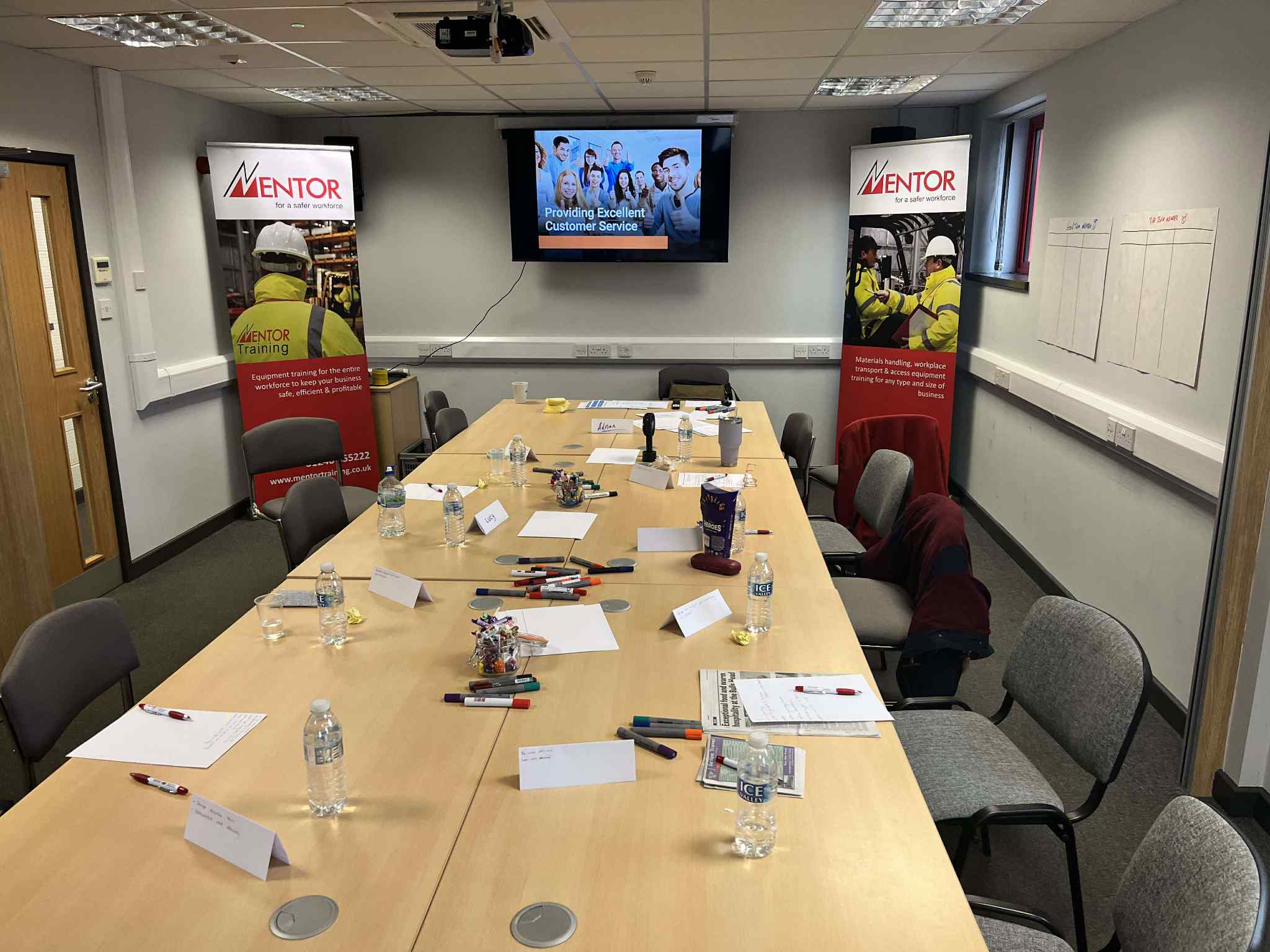
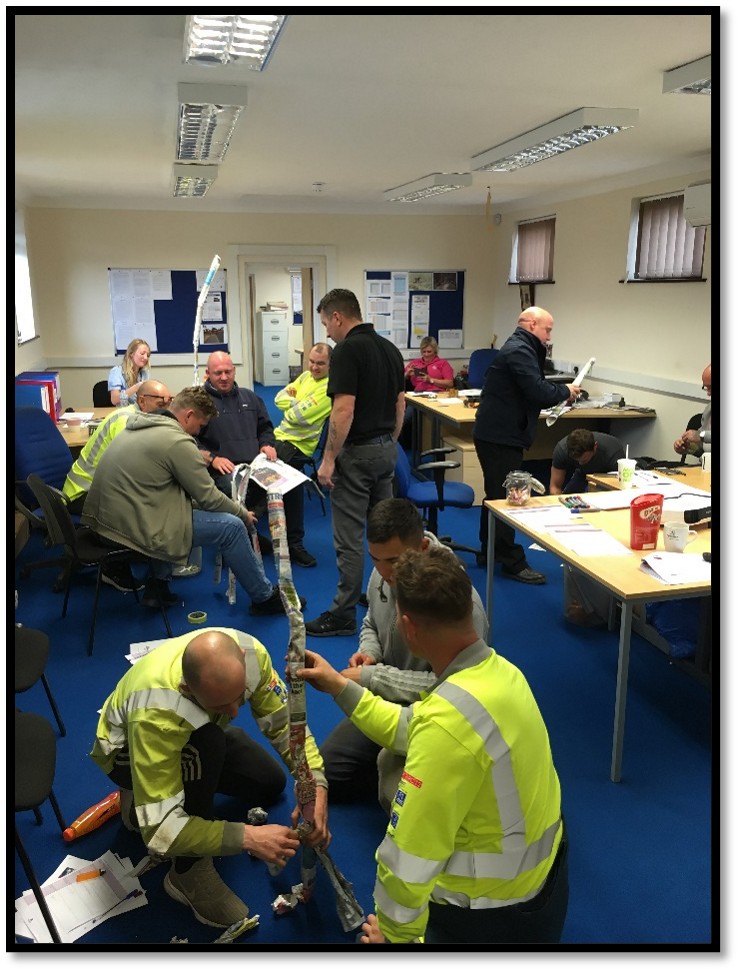 Leadership training workshop for supervisors in a manufacturing business
The Skills Front-Line Manufacturing Leaders Need Most
Front-line leadership development should be practical.
It should focus on the situations supervisors and team leaders actually face.
The most important skills include:
-
Clear communication
Supervisors need to explain priorities, standards, changes and expectations in a way people understand. -
Accountability
Team leaders need to challenge poor standards fairly and consistently before they become normal. -
Coaching
Supervisors need to develop people, not just instruct them. -
Conflict resolution
Manufacturing environments can be pressurised. Leaders need to manage tension before it damages teamwork. -
Difficult conversations
Issues such as attitude, lateness, performance, safety and quality need to be addressed early and professionally. -
Delegation
Front-line leaders need to build capability in the team rather than doing everything themselves. -
Emotional control
Teams take their cue from leaders, especially during pressure. -
Problem-solving
Supervisors need to look beyond symptoms and help prevent repeat issues. -
Change leadership
Team leaders often have to explain and reinforce new processes, systems or expectations. -
Confidence
Without confidence, supervisors avoid decisions, conversations and accountability.
These are not abstract leadership ideas.
They are practical performance skills.
Communication, coaching, conflict resolution and accountability are specifically recognised as key manufacturing leadership skills.
When these skills improve, the performance environment improves with them.
Front Line Leadership Development for Manufacturing Performance
Why is front line leadership development critical for manufacturing performance?
 Front-line leadership development for production supervisors and team leaders Front-line leadership development for production supervisors and team leaders
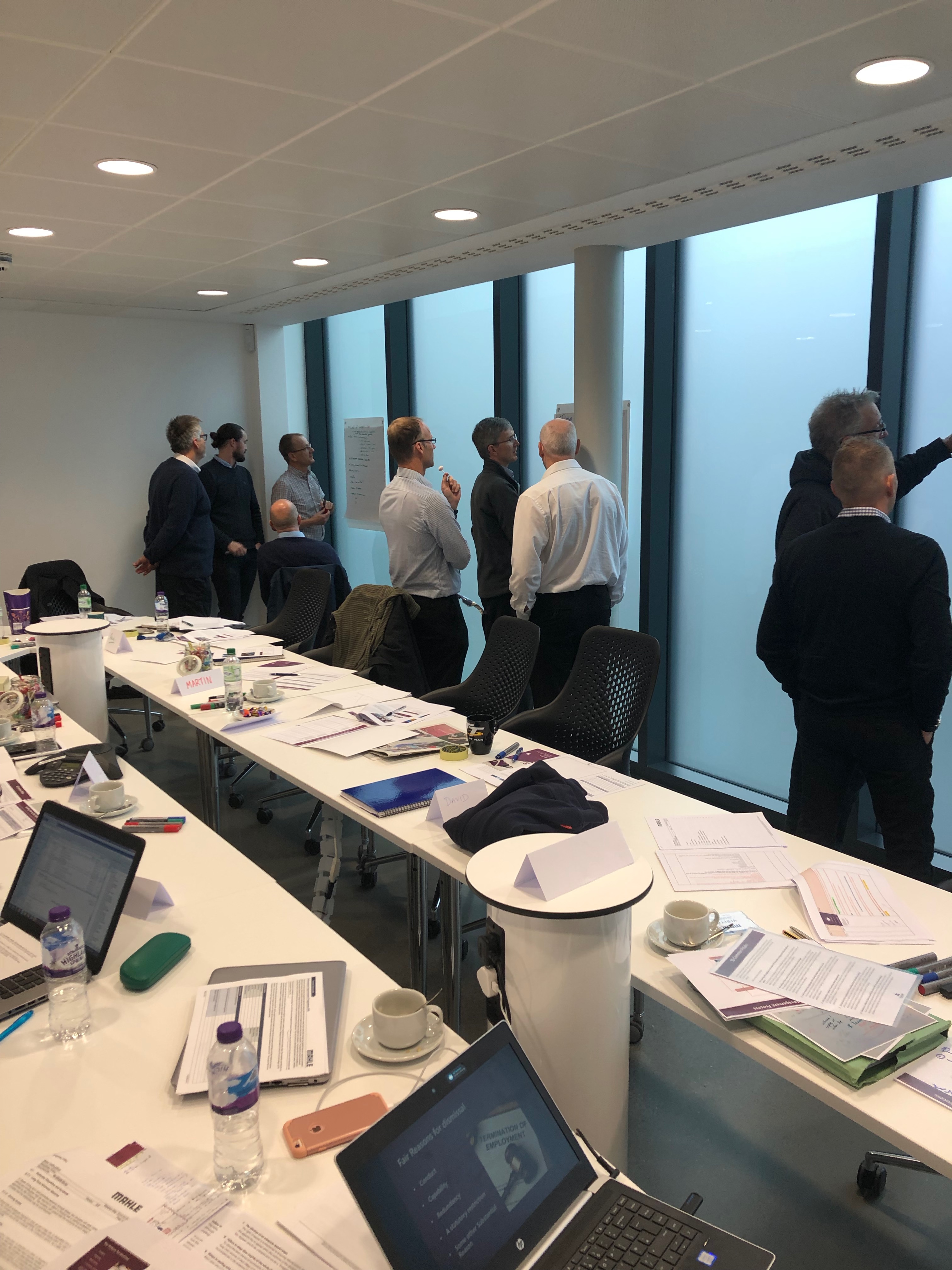 Manufacturing managers learning practical leadership and people skills Manufacturing managers learning practical leadership and people skills |
What Happens When Front-Line Leaders Are Not Developed?When supervisors and team leaders are not developed, the business pays a price. Sometimes the cost is visible.
But often the cost is quieter.
This is why front-line leadership development should not be seen as optional.
And it gives supervisors the confidence to handle issues before they become bigger, more expensive problems. Manufacturing performance is not only about what happens when things go well. It is about how people respond when things go wrong. That response is shaped by leadership. Why HR Managers Should Prioritise Front-Line Leadership DevelopmentFor HR managers and HR directors, front-line leadership development can reduce many of the recurring people issues that drain time and energy. When supervisors are not confident, HR often becomes the first place managers turn. “How do I deal with this person?” “What should I say?” “Can you speak to them?” “What if they react badly?” “I have left it too long — what now?” Of course, HR has an important role to play. But HR should not have to compensate for a lack of basic supervisory confidence across the business. When front-line leaders are trained properly, they are better equipped to manage informal conversations, set expectations, document concerns, support employees and escalate appropriately. That does not remove the need for HR. It makes HR more strategic. Instead of constantly firefighting, HR can focus on culture, capability, workforce planning, retention and leadership pipeline development. That is a better use of HR expertise. And it creates a better experience for employees, because issues are often handled earlier and closer to where they happen. |
Front Line Leadership Development for Manufacturing Performance
Why is front line leadership development critical for manufacturing performance?
Why Business Owners And Directors Should See This As A Performance Investment
For business owners, managing directors and operations directors, the return on front-line leadership development is not just about happier supervisors.
It is about operational strength.
A business with confident front-line leaders is more resilient.
- It can handle change better
- It can maintain standards more consistently
- It can develop people faster
- It can reduce unnecessary escalation
- It can improve communication between senior management and the shop floor
- It can build stronger teams
- It can create more ownership
- It can reduce dependency on a small number of senior managers
That matters because businesses become vulnerable when too much knowledge, authority or decision-making sits at the top.
Front-line leadership development distributes capability.
It helps people at the point of work make better decisions, have better conversations and take more responsibility.
That is not just good leadership.
That is good business.
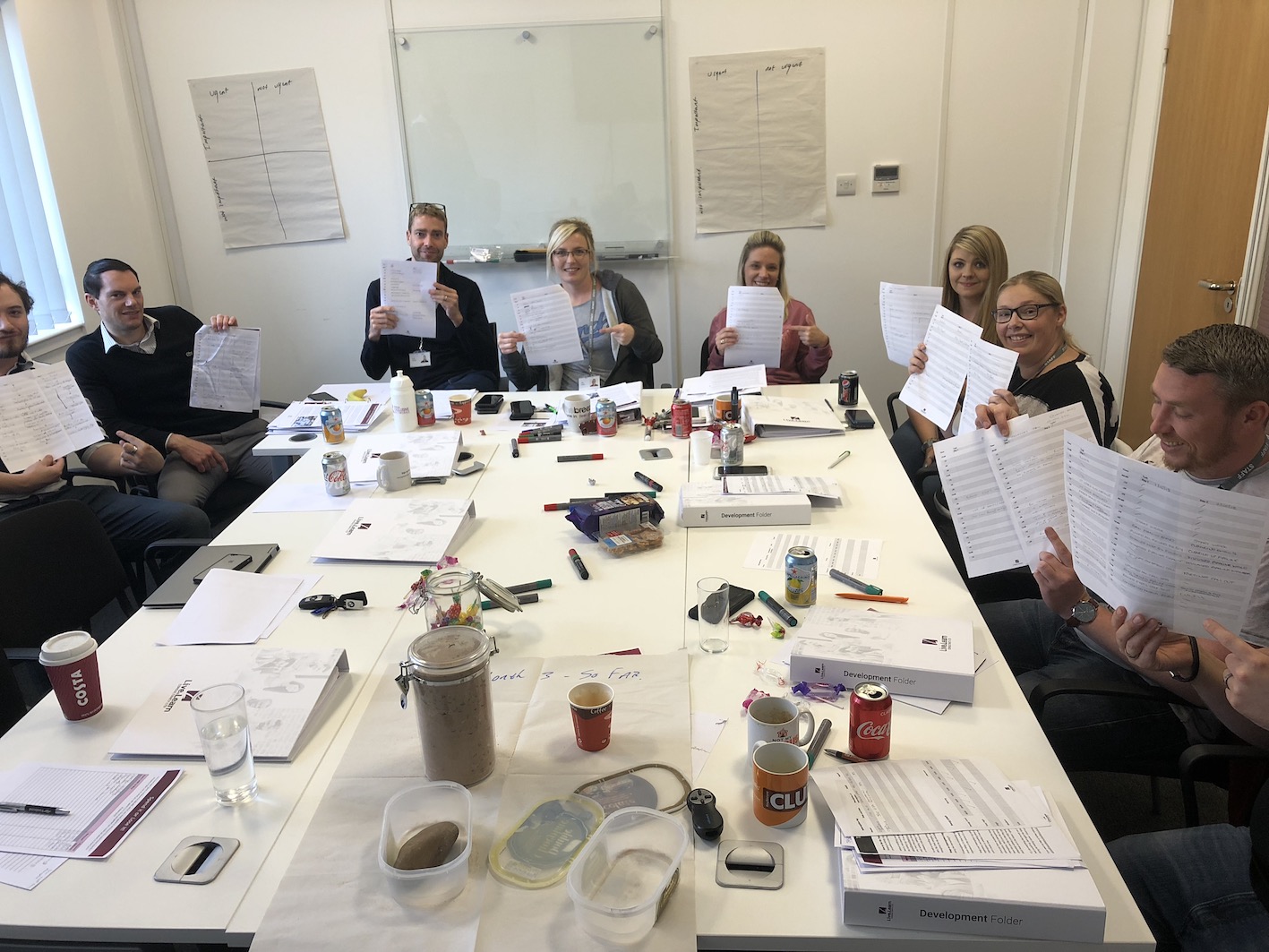 Leadership development for supervisors managing teams on the shop floor
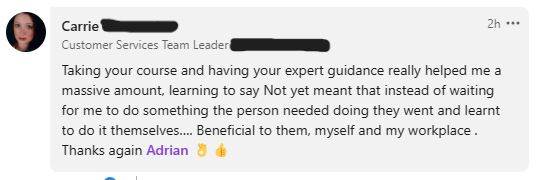 Online management training for manufacturing team leaders and new managers
Front Line Leadership Development for Manufacturing Performance
Why is front line leadership development critical for manufacturing performance?
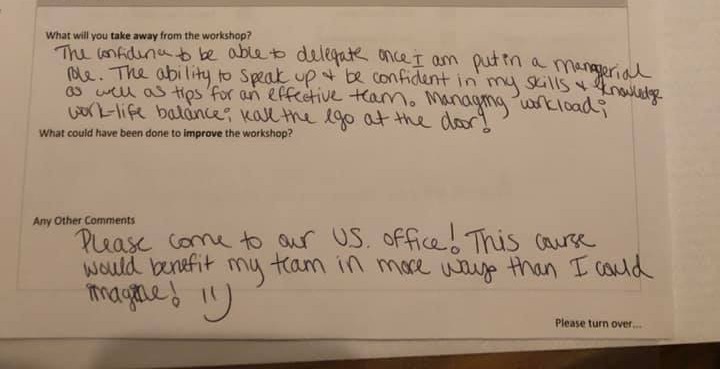 Practical leadership skills for supervisors in production and operations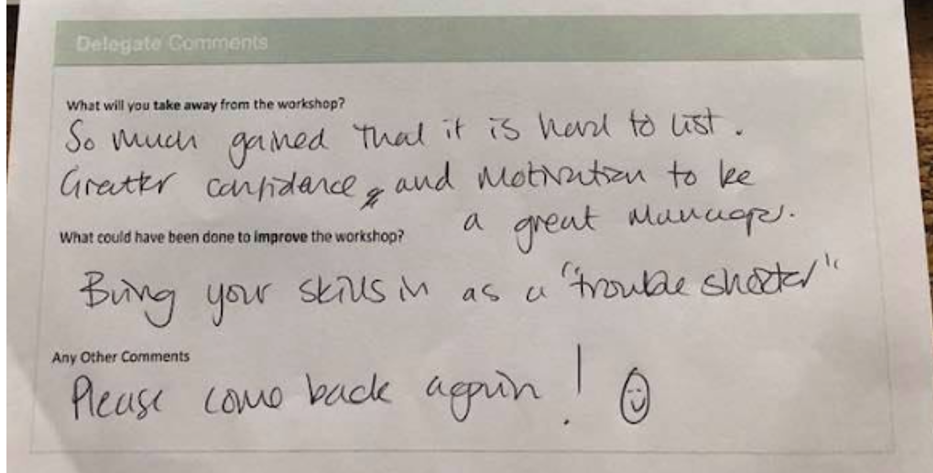
Why My Online Leadership Academy Supports Manufacturing Performance
My Online Leadership Academy for Manufacturing Teams has been designed around the real challenges supervisors, team leaders and first-line managers face in manufacturing environments.
- It is practical, supportive and focused on the skills that improve day-to-day performance
- It is suitable for individuals who need to build confidence
- It is suitable for teams who need consistency
- It is suitable for HR managers who want a scalable leadership development solution
- It is suitable for business owners and directors who want stronger front-line capability without disrupting production
The Academy helps manufacturing supervisors and team leaders develop communication, accountability, coaching, confidence, difficult conversation skills, delegation, problem-solving and leadership consistency.
And importantly, it includes monthly training and support sessions with me, the trainer.
That monthly support matters because leadership development does not happen from watching content alone.
Supervisors need to ask questions.
- They need to discuss real issues
- They need help applying the learning
- They need encouragement when confidence dips
- They need practical guidance when a situation is difficult
The Academy provides that structure and support.
Front Line Leadership Development for Manufacturing Performance
Why is front line leadership development critical for manufacturing performance?
About The Trainer - Front Line Leadership Development for Manufacturing Performance
The Online Leadership Academy is delivered by me, Adrian Close, a multi award-winning business manager and training consultant with real experience of the issues manufacturing supervisors and team leaders deal with every day.
That matters because manufacturing leadership is not theoretical.
It involves real pressure, real people and real consequences.
I understand the practical challenges front-line leaders face, including:
- Poor shift handovers
- Operators not following agreed processes
- Supervisors avoiding difficult conversations
- Team leaders struggling to manage former colleagues
- Quality issues causing blame between departments
- Absence, lateness and reliability concerns
- Low morale after periods of pressure
- Conflict between experienced and newer employees
- Production targets creating tension between speed and standards
- Health and safety conversations being avoided
- Agency staff integration
- Apprentices needing structure and feedback
- Employees resisting change
- Managers feeling stuck between senior expectations and shop floor reality
- Team leaders lacking confidence in meetings
- Firefighting becoming normal
- Improvement ideas being ignored
- People saying “that’s not my job”
The Academy is built around these realities.
It gives supervisors practical tools, supportive guidance and the confidence to lead more effectively in the situations they actually face.

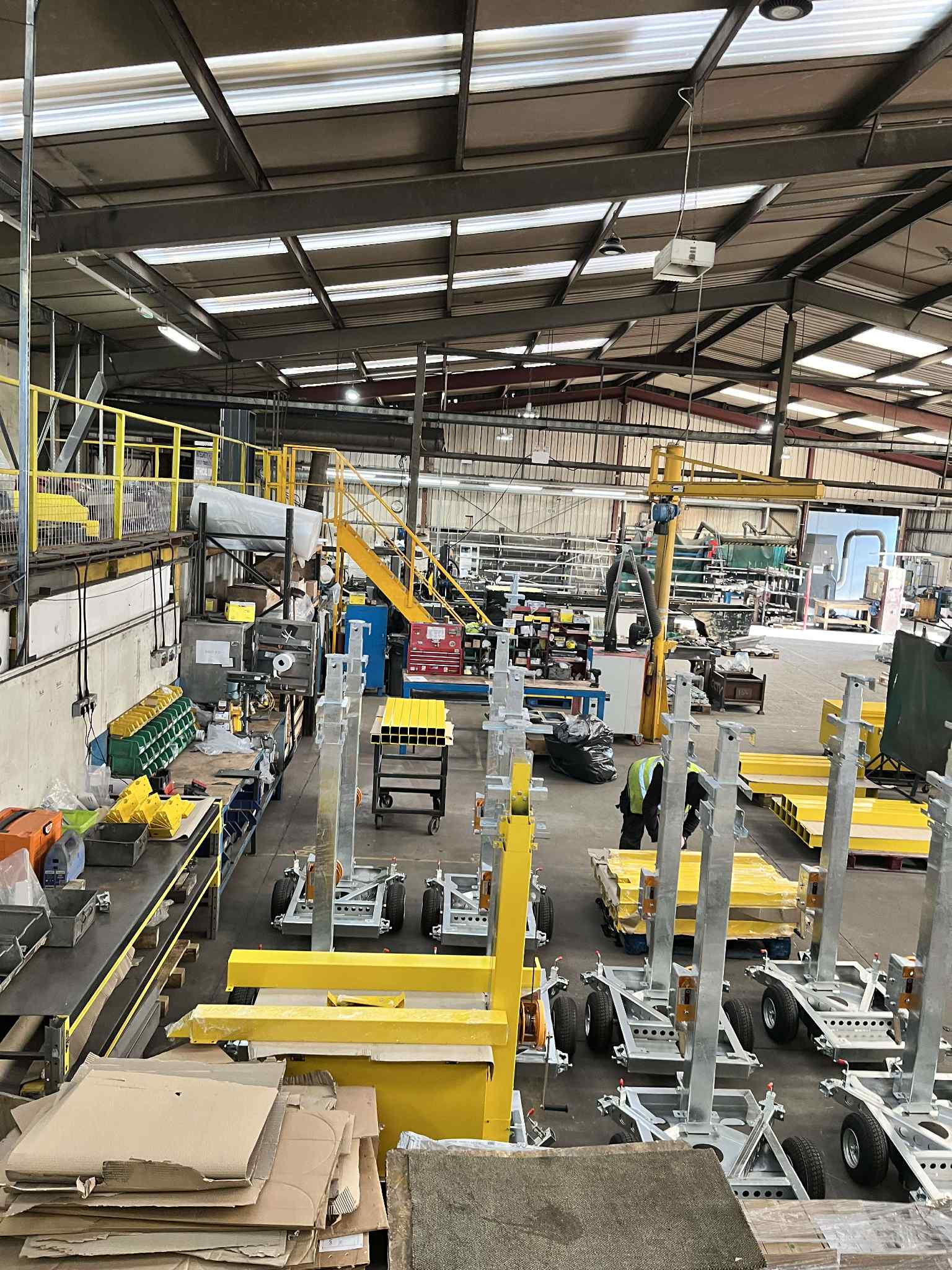 Manufacturing training programme helping managers lead with clarity and confidence
The Final Point: Performance Follows Leadership
Manufacturing performance does not improve by accident.
- It improves when people understand expectations
- It improves when standards are clear
- It improves when supervisors communicate well
- It improves when team leaders coach people
- It improves when problems are addressed early
- It improves when people feel respected and accountable
- It improves when front-line leaders are confident enough to lead
That is why front-line leadership development is critical for manufacturing performance.
Because the people closest to the work often have the greatest daily influence on whether the business performs well or struggles.
If you want better communication, stronger accountability, safer teams, improved productivity, higher engagement, reduced turnover and more consistent standards, start with the people leading the front line.
- Develop them
- Support them
- Give them the tools they need
- And do not leave leadership to chance.
My Online Leadership Academy for Manufacturing Teams is designed to help manufacturing businesses do exactly that - develop confident supervisors and team leaders who can improve performance where it matters most: on the front line.
Contact One of the Team Here to Discuss Your Training Needs
Front Line Leadership Development for Manufacturing Performance
Why is front line leadership development critical for manufacturing performance?
Companies That Have Received Leadership and Management training From Us - Both On and Off-line
 Manufactures Machines
 Civil Engineers
 Sheffield Engineering
 Carbon Technology


 Heating Solutions
 Engineers and Sustainability Consultants



 Chutney and Relish

 Food Producers




Front Line Leadership Development for Manufacturing Performance
Why is front line leadership development critical for manufacturing performance?
See our latest articles and more:
Which online leadership training works for manufacturing supervisors?
How do I train production team leaders without taking them off the floor for days?
What leadership skills do first-time managers in manufacturing need?
What is the best way to develop shift leaders in a factory?
Can leadership training be delivered online for manufacturing teams?
Why Promoting Technically Skilled People Without Leadership Training Creates Problems
The Leadership Skills Every Manufacturing Supervisor Needs to Succeed
How Online Leadership Training Can Support Busy Manufacturing Teams
From Shop Floor Expert to Confident Leader: What New Managers Need to Learn
Why Front-Line Leadership Development Is Critical for Manufacturing Performance
Click here for more information about Adrian Close, Director of Learning at Ultimate Leadership Training
 Adrian Close’s Starting Strong book used in leadership training for manufacturing managers
Thank you for visiting our Front Line Leadership Development for Manufacturing Performance page, here is a link to our Homepage
Front Line Leadership Development for Manufacturing Performance, discover why front-line leadership development improves manufacturing performance, productivity, engagement and supervisor confidence.
A practical blog explaining why front-line leadership development is critical for manufacturing performance, covering supervisor skills, team leader confidence, communication, accountability, productivity, employee experience and the value of online leadership training for manufacturing teams.
Front Line Leadership Development for Manufacturing Performance
Why is front line leadership development critical for manufacturing performance?